
By Aga Cummins
Do you know that yoga may be one of the most beneficial activities done antenatally? Attending a class hosted by a trained teacher may prepare you both physically and mentally for the arrival of your baby. It’s also an excellent bonding time for you and your baby. I will further focus on all the benefits that pregnancy yoga may allow you to enjoy as well as on what to expect (pun intended) during a class.
Let me describe firstly what antenatal yoga really is. In a nutshell it’s a practice that covers mindfulness, breath work, meditation and gentle physical exercise. It’s more than just a 60 minutes class. The practices and benefits can be enjoyed beyond studio practice and the incorporated lifestyle of an expectant person. The goal is to stay healthy in the body and mind as well as to prepare for labour, birth and postpartum period. Added bonus is of course the building the bond and positive attachment with your baby.
The benefits of antenatal/pregnancy yoga class.
On the physical level antenatal yoga aims for gentle improvement of flexibility. This should be a paced process and a trained teacher will always bare in mind the impact of relaxing on an expectant person’s body. You will learn more about this hormone in my future blog post. Pregnancy yoga also focuses on building up the strength necessary to carry and birth your baby. Other aspects of attending the classes are learning relaxation techniques as well as breathing exercises. Those are very handy items in every birthing person’s tool kit.
One of the 2015 studies https://pubmed.ncbi.nlm.nih.gov/26118705/suggest that prenatal yoga may help reduce pelvic pain. It may also improve mental condition. Stress, anxiety, prenatal depression may be positively impacted. Your physical condition also benefits from attending classes on a regular basis. This relates to common discomforts experienced by expecting people (nausea, swollen ankles, fatigue, etc) as well as condition of labour and birth (strength, paid, pleasure, etc.). It’s also important to highlight pregnancy yoga was found to have positive impact on perinatal outcomes (obstetrical complications, delivery time, etc.)
Other studies https://www.mayoclinic.org/healthy-lifestyle/pregnancy-week-by-week/in-depth/prenatal-yoga/art-20047193 also list benefits such as:
-Improved sleep
-Decreased lower back pain
-Decreased nausea
-Decreased carpal tunnel syndrome
-Decreased headaches
-Reduced risk of preterm labour
-Lowered risk of intrauterine growth restriction (a condition that slows the baby’s growth)
It’s also worth mentioning that attending yoga classes will allow you to build up a necessary network. You will meet your peers, exchange tips, discuss topics relevant to you all. Yoga classes are a form of a support group. A trained and skilled teacher will enable this to happen alongside with the yoga practice. Some lifelong friendships were formed at antenatal yoga courses.
What I will experience during classes?
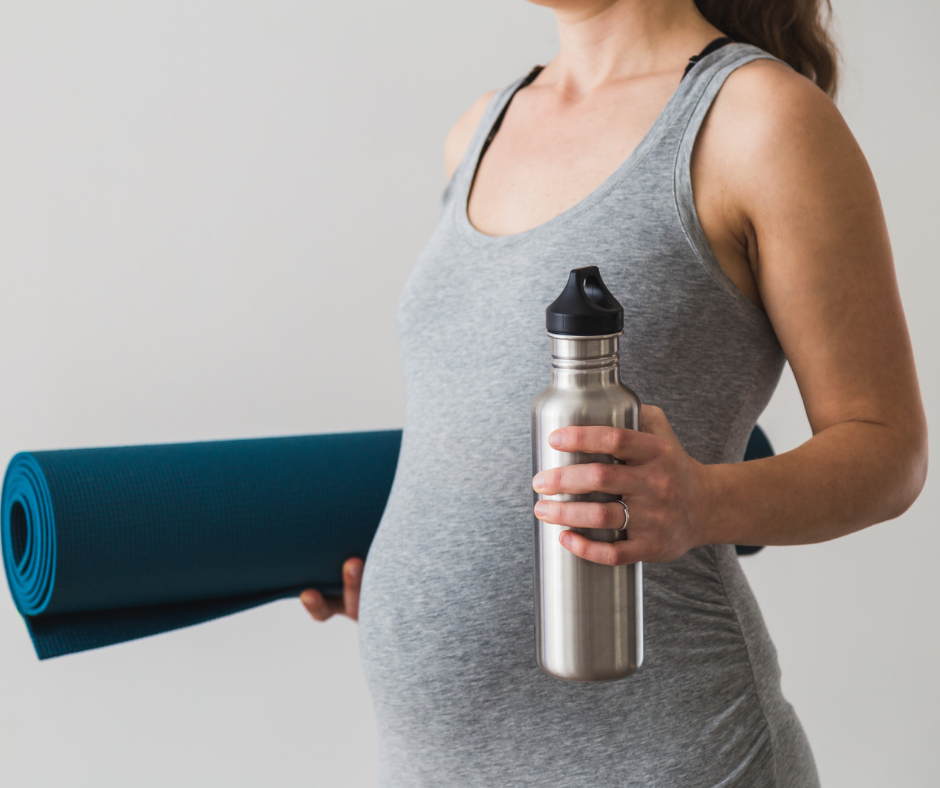
Post COVID the usual requirement is to bring your own mat for hygiene reasons. However, most studios will still provide a mat. As for props they may be limited to blocks and bricks. Some teachers have balsters with reusable cotton covers as well as sterilised stools and chairs (3rd trimester practice may be more beneficial with chair yoga elements). Remember to bring your own bottle of water to stay hydrated. The classes are usually 55 to 60 minutes long.
The classes consist of welcome and arrival. This allows you and your bump to ease into the practice. The invitation is to connect the body and mind as well as initiate bonding with your baby. This part of the class varies between hosts and is an integral part of their teaching style.
This is followed up by breathing techniques known in yoga as pranayama. Not all breathwork practiced in regular yoga classes is suitable for an expectant person. An experienced teacher will introduce safe breathing techniques that may be used throughout pregnancy as a private practice as well as during the labour. Prenatal yoga breathing techniques might help you reduce or manage shortness of breath during pregnancy.
The next part is a very gentle warm up. You will experience slowly paced basic stretches. Some teachers offer modified sun salutations. This may be a half sun salutations or full ones with props. This is to awaken your muscles as well as to assure proper energy flow in and out of your body with the wellbeing of you and your baby in mind. You’ll be encouraged to gently move different areas of your body, such as your neck and arms, through their full range of motion.
Asana practice, or practice of the postures, is the next part. While standing, sitting or lying on the ground, you’ll gently move your body into different positions aimed at developing your strength, flexibility and balance. Props, such as bricks, blocks and bolsters, might be used to provide support and comfort. The poses may be experienced as still practice or a flow where there’s a gentle movement incorporated.
Before relaxation some teachers encourage the practice of visualisations. This may benefit the bonding process between you and your baby. Also may be useful during labour and birth.
Shavasana is the time where your mind will be allowed to soak up the benefits of physical practice you and your baby have experienced. It’s a perfect wind down time where a guided meditation may be offered to follow. It’s important to notice that shavasa in antenatal yoga is practised in a slightly different way than in regular yoga. Yoginis are on the mat lying on their left hand side. It improves circulation, giving nutrient-packed blood an easier route from your heart to the placenta to nourish your baby. Lying on the left side also keeps your expanding body weight from pushing down too hard on your liver. While either side is okay, the left is best. .
When can I join the antenatal yoga class?
If the pregnancy has no complications it’s ok to join in anytime, even in the first trimester. However, for most people the first three months of pregnancy may be challenging. The levels of fatigue and nausea may prevent them from continuing any form of exercise. Also, the risk of miscarriage is statistically high during the first trimester and some expectant people continue on with caution. Traditionally the twelve weeks mark is the time when most pregnant people join in the classes. Yoga can be enjoyed up to giving birth. The best practice is always to contact your GP/midwife/maternity unit to discuss any concerns in relation to any antenatal physical exercise.
I hope you enjoyed this blog post and found all the information beneficial for you and your baby.
Aga ⋒